
The Olympic Games are a monumental event for sports enthusiasts and fans worldwide, writes ivancouver. For professional athletes, it is a chance to achieve exceptional results and reach significant milestones in their careers. The Olympics serve as a rewarding acknowledgment of their hard work. As we know, preparing for the Games is an arduous and resource-intensive process, requiring immense dedication from athletes and their coaches.
Beyond the athletes and spectators, hosting the Olympics is a significant occasion for the host city, which carries the enormous responsibility of organizing and preparing for the event. Every detail, no matter how small, must be meticulously considered.
One of these crucial details is the Olympic symbols. These symbols are typically designed specifically for the event, embodying the spirit of the Games. They appear everywhere—from the decoration of arenas, tracks, and courts to the uniforms and equipment of the athletes.
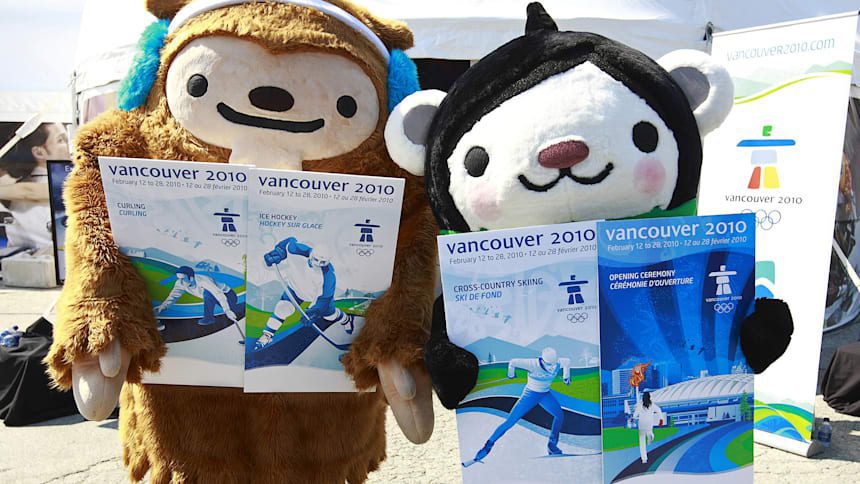
In 2010, Vancouver had the honour of hosting the Winter Olympics. The city rose to the challenge magnificently, delivering a world-class event. The Olympic symbols created for the event were no exception, standing out as unique and memorable. In this article, based on information from olympics.com, we explore these iconic symbols.
Inspired by Nature
The creators of the Vancouver Olympic symbols drew inspiration from the natural world and the legends of the Indigenous peoples of Canada’s West Coast.
After a long creative process, two extraordinary characters were born: Quatchi and Miga.
The Main Symbols
Quatchi is a sasquatch, or a yeti, a creature often mentioned in Canadian folklore. He is depicted as living in the forest, with his body covered in thick fur.
His distinguishing features include winter boots and furry earmuffs.
Miga, the second mascot of the Vancouver Olympics, is a mythical sea bear. This character combines traits of two animals: an orca and the Kermode bear, also known as the spirit bear, which is native to British Columbia.
Among Indigenous peoples, the Kermode bear is considered sacred and referred to as the “ghost bear”.
A Rigorous Selection Process
Before the Olympic mascots were finalized, the organizing committee held a competitive tender. Illustrator agencies and designers from across Canada submitted 177 entries. From this extensive pool, only five designs were shortlisted.
The winning design came from the company Meomi, whose vision brought Quatchi and Miga to life.
Another Companion
It’s worth noting that Quatchi and Miga were joined by a friend, Mukmuk. While not officially designated as an Olympic mascot, Mukmuk became immensely popular among fans.
Mukmuk is based on the Vancouver Island marmot, a rare species native to Vancouver Island. His name, derived from the Chinook language, translates to “food.”
Initially, Mukmuk appeared only in digital and paper formats. However, due to his growing popularity, toys, souvenirs, and other merchandise featuring this adorable character were eventually produced. As a result, Mukmuk became a beloved figure among Olympic fans and participants alike.
The Vancouver 2010 Winter Olympics not only left a lasting legacy in the world of sports but also introduced these endearing mascots, which continue to evoke fond memories for those who experienced the Games.