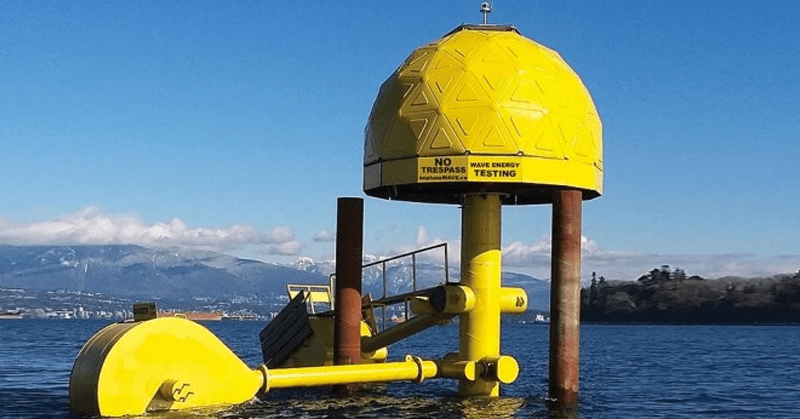

The ocean is a boundless source of energy, with the potential of waves estimated at over 2 million megawatts. Waves are a renewable energy source, offering a viable alternative to solar and wind power. This is why Vancouver inventor Charles Haynes decided to transform wave power into electricity by installing a power station near his home. More on ivancouver.
How the Idea of a Wave Station Emerged
One day, Haynes was exploring alternative power systems for his home. He immediately dismissed the idea of a solar station due to Vancouver’s predominantly cloudy weather. Wind turbines were also not a common choice for energy generation in the area. That night, as Haynes and his wife went to bed, he woke up two hours later to the sound of waves crashing on the beach at Howe Sound. That’s when he got the idea to harness wave energy. After making numerous inquiries with wave energy companies planning to develop their own engines, and receiving no results, Haynes decided to start working independently.
The First Station Models and Their Functionality
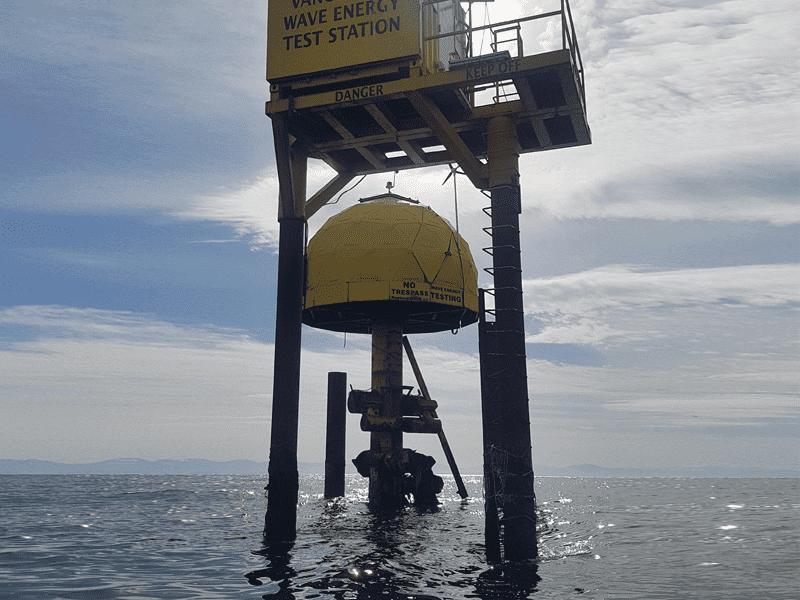
Haynes installed the prototype station 800 meters from Wreck Beach. The first model resembled a large metal arm that moved up and down with the waves, generating electricity. However, after a year of operation, the arm broke. Haynes returned to the drawing board.
He then created a new design. Simply put, the station resembled a “donut on a stick” with a floating mechanism. The “donut” was a buoy with a diameter of three meters, a thickness of two meters, and a weight of 10 metric tons. The “stick” was a post mounted on the seabed, along which the buoy moved up and down with the waves. Additionally, Haynes installed a meter near the engine to measure the amount of electricity generated.
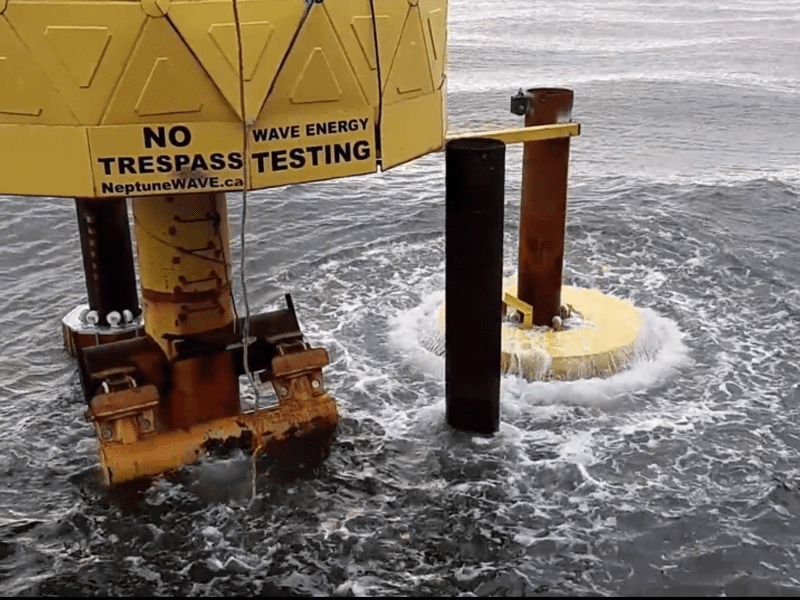
Although the coastline of British Columbia doesn’t have the largest waves or tidal movements compared to other parts of Canada or the world, smaller waves were perfectly suitable for Haynes’ needs. According to him, with his floating design, faster and smaller waves can make the engine’s buoy travel greater distances than larger, slower waves would.
Engine Power
The engine can generate between 1 and 20 kilowatts of power. However, the highest readings recorded by Haynes reached 12 kW during storms with large waves. For most of the year, the smaller waves generate between 1 and 4 kW. Nevertheless, this is enough to power the lighting in his home, as well as appliances like an electric kettle, microwave, and refrigerator.
Even with this power output, the wave engine is a better option than solar panels or wind turbines. As Haynes notes, solar and wind energy produce intermittent power, while waves generate continuous energy. With a wave generator, electricity is always being produced.
From Project Success to a Business
Eleven years after the successful launch of his project, Haynes founded Neptune Equipment Corp., a company that tests Neptune wave engines. This technology can help small coastal communities generate electricity, replacing diesel generators and reducing greenhouse gas emissions. Additionally, wave energy stations can act as breakwaters, protecting ports, harbors, and shorelines from erosion.
However, despite its advantages, wave energy accounts for only 1% of global electricity production. The limited use of wave engines is primarily due to the high cost of energy generation. One kilowatt of electricity produced at a wave energy station is several times more expensive than that produced at thermal or nuclear power plants.