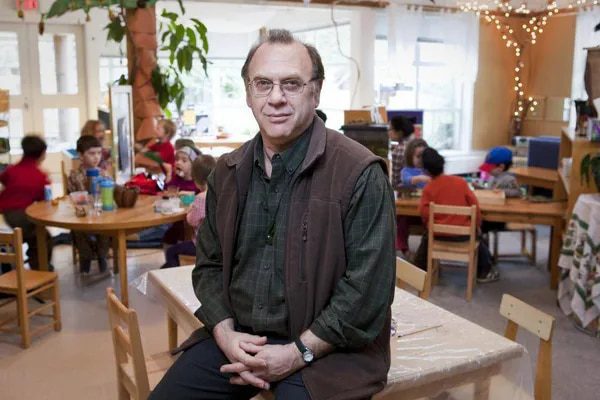

Vancouver is a city where science has always thrived, writes ivancouver. Over the years, a significant number of individuals in this city have dedicated themselves to scientific research, with many of them being “generational scientists”.
In this article, based on information from memorial.supporting.ubc.ca, we want to highlight a prominent and distinguished figure from Vancouver’s scientific community. His innovations have been successfully adopted in kindergartens across Canada and in other parts of the world.
Clyde Hertzman: A Leading Scientific Mind
In the field of science, Clyde Hertzman is recognized as a Canadian scientist specializing in social hygiene and healthcare organization. Additionally, he was a renowned expert in understanding how early childhood development affects health and well-being in later years.
Clyde also introduced the well-known concept of biological embedding.
Early Life
Clyde Hertzman was born in 1953 in Vancouver. His mother was a pharmacologist, and his father was a respected cardiologist.
At the age of 17, Clyde became interested in politics and joined a radical group in Vancouver. Although his interest in radical ideas diminished over time, he maintained a strong belief in equality and egalitarianism. These values later influenced his scientific pursuits.
Education and Family
In 1975, Clyde was admitted to McMaster University, where he graduated with a degree in public health and healthcare management.
In 1977, Clyde married Martha Ellis, and by 1982, they had three children. However, the family separated in 1999.
Scientific Career
During his university years, Clyde met Fraser Mustard, a leading Canadian expert on social determinants of health. Fraser inspired the young scientist to delve into the connections between early childhood development and public health.
This focus became the cornerstone of Hertzman’s scientific career.
One of the most significant milestones of his work was the introduction of parameters for assessing children in Vancouver’s kindergartens. These parameters included physical health, social development, emotional maturity, language, and communication. This tool, called the Early Development Instrument (EDI), was adopted by almost all Canadian kindergartens within a few years.

Hertzman also developed the concept of biological embedding, which posits that social environments and life circumstances during early childhood are encoded in genetic “memory,” influencing how inherited genes are expressed.
Public Recognition
Clyde Hertzman was known as a professor at the School of Public Health at the University of British Columbia. He also founded the Human Early Learning Partnership, a research initiative focused on early childhood development.
In 2010, Hertzman was named Canada’s Health Researcher of the Year by the Canadian Institutes of Health Research.
He was a fellow of the Canadian Academy of Health Sciences and the Royal Society of Canada.
In 2012, Hertzman was appointed an Officer of the Order of Canada. Tragically, shortly after receiving this honor, he passed away from a heart attack at the age of 59.