
Vancouver has gifted the world a remarkable number of truly talented individuals, writes ivancouver. These individuals have achieved success in various fields of human endeavor. One of the brightest areas where Vancouver natives have made a name for themselves is science. Vancouver’s scientists have developed numerous ideas, concepts, and theories that have been implemented in various fields such as engineering, medicine, geology, ecology, biology, physics, chemistry, sociology, and mathematics. These scientific figures have been awarded the highest and most prestigious accolades, proving their societal recognition and significant contribution to science.
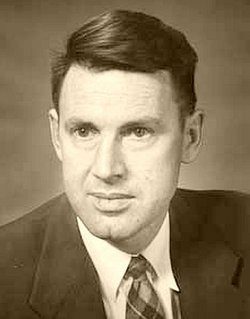
In this article, we would like to highlight one of Vancouver’s most renowned scientists – Robert Frederick Christy. Known in the scientific community as a theoretical physicist, he was a key participant in the Manhattan Project. He was also an accomplished astronomer and served as president of the California Institute of Technology (Caltech) from 1977 to 1978.
With references to webofstories.com, we will delve into the life and achievements of this talented scientist, exploring his journey in the world of science.
Early Beginnings
The scientist was born on May 14, 1916, in Vancouver. His father was an electrical engineer, and his mother was a teacher.
In 1932, he graduated from high school with the highest examination score in all of British Columbia. For this achievement, he received the Governor General’s Academic Medal and a scholarship for free education at the University of British Columbia. In 1935, he earned his bachelor’s degree, followed by a master’s degree in 1937.
His thesis focused on how an electron attaches to form a negative oxygen ion.
The Manhattan Project
Later, Christy decided to pursue graduate studies at the University of California.
In 1941, he earned his Ph.D. and was invited to work at the Illinois Institute of Technology. Simultaneously, he joined a group of scientists at the University of Chicago working on the first nuclear reactor.
When the Los Alamos Laboratory was established, Christy was invited to join the Manhattan Project. He even developed a concept that allowed a solid (non-hollow) subcritical mass of plutonium to be compressed via an implosive explosion, rendering it supercritical. This represented a significant simplification compared to earlier designs requiring a hollow core.
Academic and Teaching Career
Following his involvement in the Manhattan Project, Christy continued his scientific and teaching endeavors. He eventually held positions as dean, provost, and president at Caltech.
New Interests
In 1960, Christy developed an interest in astrophysics. He began creating the first practical numerical models to describe stellar processes.
For his contributions, he was awarded a prestigious medal by the Royal Astronomical Society. During the 1980s and 1990s, he served as a member of the Dosimetry Committee under the National Research Council. This organization studied the radiation effects of the atomic bombings in Japan, aiding in understanding the medical risks associated with radiation exposure. These studies remain of critical importance and relevance.
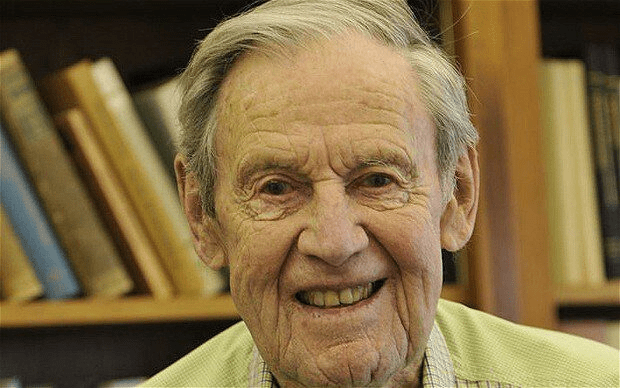
Christy passed away on October 3, 2012. He is remembered as the last surviving direct participant in the Manhattan Project.